
The month is finished. Sales were solid, the P&L indicates a profit and nothing is to be seriously incorrect.
You should then check the restaurant’s bank account.
The number isn’t what you would have expected.
This gap can be a source of frustration for restaurant owners as they feel that profit and cash availability should tell the same tale. But they don’t. A P&L measures how well the company’s financials have performed over a certain time while the bank account represents the exact timing of funds moving in and out of the company.
Understanding the difference will change the way a restaurant’s manager views their finances.
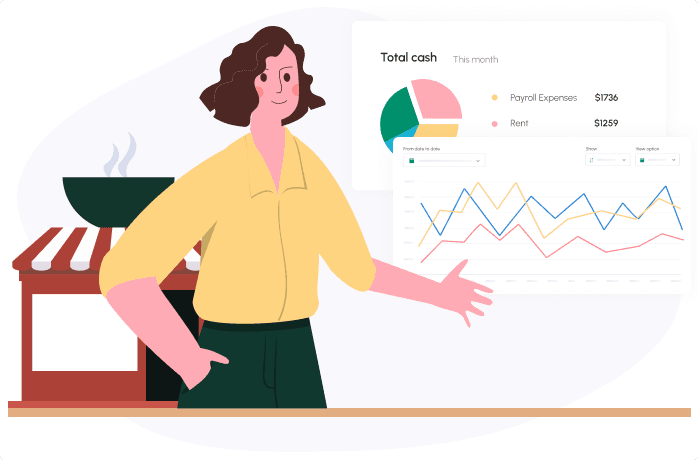
Have a look at what happens during a normal week. Customers pay for meals. Employees need to be paid. Invoices will be sent out with meals and beverages delivered. Rent is coming up. Deposits made with credit cards come with their own schedules. Taxes on sales have been collected, but that money has a responsibility.
Already, the next week’s purchases have started.
If you are only looking at the amount of revenue or the final profit, then you will overlook a significant portion of this action.
The Clue May Be Hiding in Prime Cost
When restaurant profitability starts moving in the wrong direction, then food, drinks and labor costs need consideration.
Prime cost consists of both the cost of products and labor. The Bookkeeping Chefs’ instructions place the main cost between 60 and 65% of revenues for many restaurants. They also stress weekly monitoring instead of waiting until the end of the month.
Effective primary cost management is less about worrying about one particular percentage, and more about recognizing changes early.
If the restaurant is performing within its targets However, this week’s number is higher. Perhaps overtime was is up. Perhaps beverage costs were steady, but food costs increased. A higher proportion of food might prompt the operator to look at purchasing, waste management, portions and menu mix, or vendor charges.
The percentage raises questions. The underlying restaurant activity provides the answer.
Weekly reports make that conversation possible while everyone remembers the events.
Two or three weeks later after that, the details become more difficult to reconstruct.
Then the Vendor Bills Show Up
Restaurants may purchase ingredients during a week and pay for them the following week. This explains why knowing the profit isn’t enough to answer every cash question.
Invoices from vendors must be accounted for, tracked and paid. The manual process of completing this task in an environment with many suppliers could become an enormous administrative burden.
Automating accounts payable can help organize the process, reducing repetitive handling of bills and payment details. The owner can get better insight into the obligations that haven’t yet landed on their bank account through the bookkeeping software that is connected to.
This is advantageous, since the bank’s balance may appear more healthy than the restaurant’s actual situation in the near future.
The current balance could be an amount of $80,000 in the account. The $80,000 amount is little if vendors, rent or payroll make up a large portion over the next few days.
That leads naturally to cash flow forecasting.
The most appropriate question to ask yourself is “What happens to our cash after we receive it and have met the obligations that we know?”
It is important to know the difference before deciding if this week is an ideal moment to upgrade equipment, buy more items or save the cash flow.
You may not be entitled to all the money you thought.
Sales tax illustrates the point particularly well.
The cash restaurant owners receive from patrons will eventually have to be managed in accordance with its tax obligations. If the money is mentally mixed with operating cash, then the bank balance could be misleading about the amount of cash available.
Regularly maintained records allow restaurants to comply with sales taxes while giving management a complete picture of their financial situation.
Restaurant accounting is more efficient when the financial responsibilities of each restaurant are handled separately.
Prime cost affects margin. COGS and future payments are impacted by purchases from vendors. Payroll and cash availability are affected by payroll. The availability of cash is influenced by sales tax. The P&L documents financial performance while forecasting helps management look ahead.
Connect the pieces.
Bookkeeping Chef can help bring these elements together, using restaurant-specific reports as well as system integrations. Outsourced bookkeeping can help owners who do not wish to work all night reconciling their financial data.
The last section is very important.
It’s not the goal for restaurant owners to stop checking their books because someone else does. Owners need to be informed that will help them to understand what’s happening.
If the P&L shows that the restaurant is profitable but the bank balance feels tight, do not assume that the P&L could be wrong.
Find out what transpired between you and your partner.
This question will reveal more about your company than any other number.