
A municipality has an outdated wastewater lift station. Pumps are advancing towards the end of their service life, and controls require modernization and the access hatch should be replaced. Although the concrete wetwell is solid in its structure, it is in need of to be upgraded.
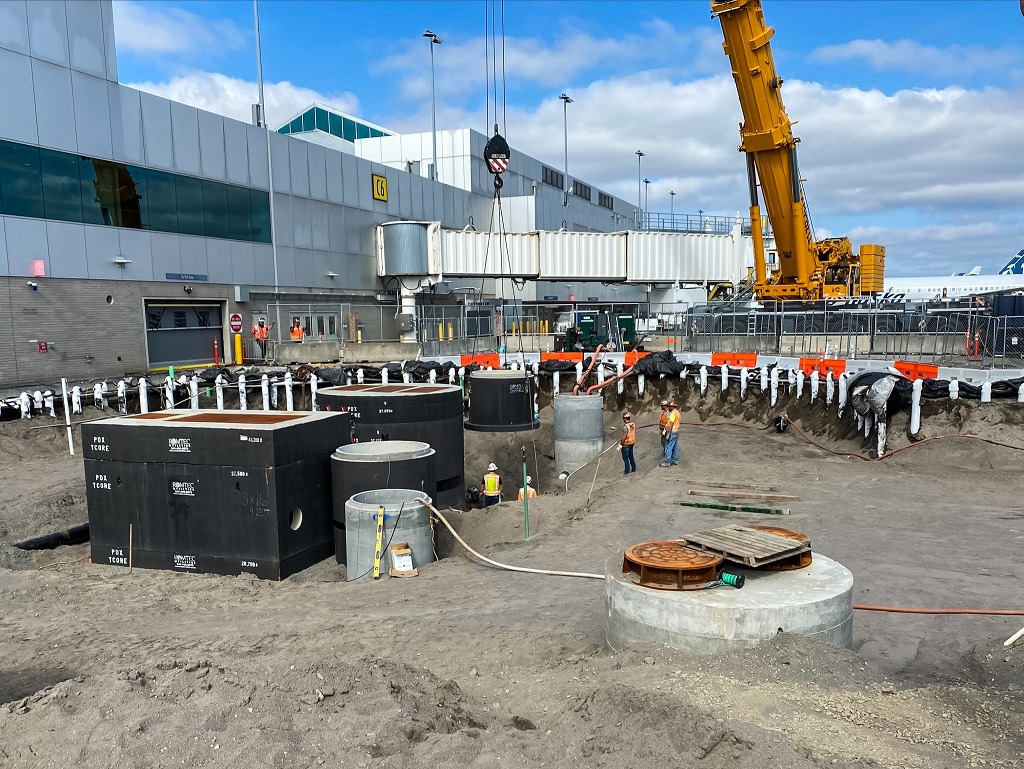
Image credit: romtecutilities.com
Should the entire station be demolished and rebuilt? Not necessarily. The best question to consider is whether or not the current infrastructure can support an efficient pumping system that is in line with modern standards without compromising reliability or future capacity.
Retrofitting pumps that are precisely designed can help save infrastructure and also replace components that are no longer meeting operating requirements.
Start with the structure that nobody wants to replace.
It is expensive and disruptive to replace the wet well because it is buried in the ground, linked to pipes and is vital for the collection of wastewater.
If the concrete structure is usable, its retention could minimize excavation and construction work.
However, deterioration around the access hatch can complicate the process. Romtec Utilities says that wet well hatches are typically replaced in retrofits. Instead of affixing a fresh hatch to a damaged concrete structure and replacing the entire top slab could provide a more durable solution. This can make it easier to access and extend the structure’s usefulness without having to rebuild the entire wet well.
A More Powerful Pump Changes the Engineering
Imagine a neighborhood which has seen a substantial expansion since the establishment of the lift station. The pumps that are in place may not be sufficient for increased wastewater flows.
The upgrade of a pumping device could be accompanied by higher horsepower equipment, however this cannot be done without considering the entire system. For pumps that are more powerful it is possible make adjustments to the discharge elbows or pipe. You might also have to replace electrical controls or valves.
Engineers must also think about the hydraulic needs of the system. This is a consideration for flow as well as total dynamic pressure. A larger pump installed without studying these factors can lead to problems in operation instead of resolving these. Planning future capacity prior to initial design makes future expansion significantly easier.
Make sure that the wastewater is moving during construction.
A wastewater pump station retrofit introduces a challenge that ordinary equipment replacement projects may not face: the station may need to remain operational throughout construction.
Contractors continue working and wastewater is still expected to arrive. According to the scope of the project temporary bypass pumps could be required in order to maintain services during removal and the installation of the existing equipment.
Romtec Utilities tackled this type of problem at the Federal Law Enforcement Training Center in Brunswick, Georgia.
The project involved the replacement of two aging wastewater lift stations, while keeping the operation of the facility. Specific engineering for the site as well as packaged systems and bypass pumping techniques helped accommodate existing station footprints and operational needs. The case study illustrates why construction sequencing deserves attention before the construction process starts.
When Replacement Becomes the Better Choice
Some stations are not suitable to be renovated. A seriously damaged wet well or a structural weakness or significant changes to hydraulic requirements may make sewer lift station replacement more appropriate than modifying the existing installation.
The decision should account for structural health, equipment compatibility, construction access, service continuity, and long-term operational requirements. Romtec Utilities begins retrofits and replacements by identifying components which are expected to stay and the ones that require replacement.
The company then develops engineering solutions tailored to the site, as well as preliminary plans and budget estimates. Prefabricated components help organize installation, and reduce on-site construction.
The Project isn’t Over Until the Pumps Are Running
Modern lift stations should function as a complete system. Before returning it to regular maintenance, initial testing and commissioning help verify that the pumps, controls and other equipment are operating according to the design approved.
Operator training and maintenance and operation manuals are equally crucial. Maintenance personnel need to understand the new equipment, operating procedures and the documentation prior to taking over for the station.
Retrofitting successfully preserves the infrastructure while also addressing the shortcomings that led to the need for modernization.
Municipalities and owners of facilities must be aware of the need for more than just immediate repairs. The most effective project is one that integrates the new equipment into existing structures, maintains essential service throughout construction, and then prepares the pumping system for years to come of operation.